Sleep, work & the production day
What a Mattress Pad Can—and Can’t—Do for Sleep on a Production Schedule
A thin layer of bedding can make an unfamiliar bed feel a little more like a bed you chose. It cannot persuade a 4 a.m. call time to become 9, quiet the ice machine down the hall, or make a rotating schedule behave like a routine. For film and television crews, knowing the difference is part of packing wisely.
There is a particular kind of fatigue that arrives with a production schedule. It is not simply the tiredness that follows a long day. It is the tiredness of not knowing, quite yet, when the next day begins: the message that shifts tomorrow’s call, the location change that adds an hour to the drive, the hotel room whose curtains stop just short of darkness. Sleep becomes both necessary and strangely difficult to arrange.
In that setting, bedding can seem like an appealingly practical problem. A mattress pad is portable, familiar, and less ambitious than a complete sleep overhaul. It may soften a firm surface, add a little cushioning, or protect a mattress from spills and everyday wear. Those are useful things. But the pad is a supporting actor, not the lead. Its effects are local: it changes the feel of the surface beneath you. It does not remedy the forces that often make rest elusive on a production schedule—noise, light, stress, travel, and shifts in when the body is asked to sleep.
The distinction matters because a bed can be uncomfortable without being the main obstacle to sleep. A pad may make an unfamiliar mattress more tolerable; it cannot make an unfamiliar room quiet. It may help a sleeper settle on a surface that feels too hard; it cannot cancel the alertness that comes from watching the clock, waiting for a call sheet, or trying to sleep at a time that conflicts with a familiar rhythm.
First, what a mattress pad is meant to change
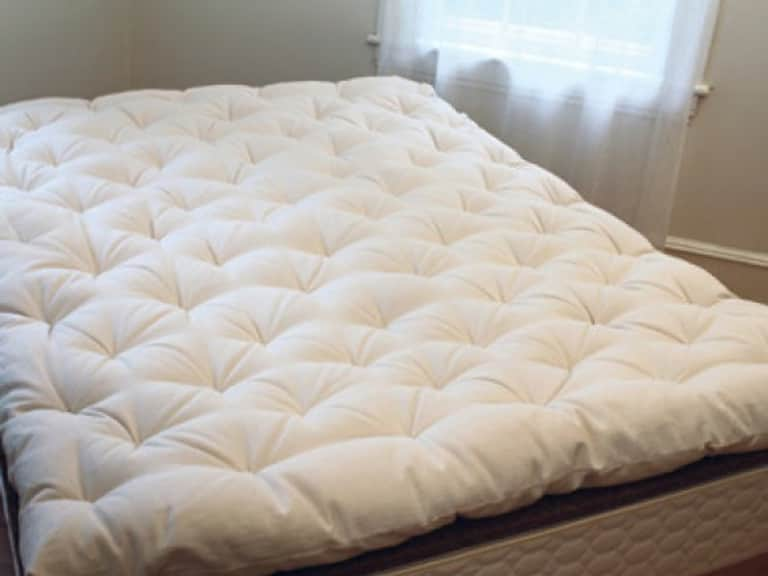
A mattress pad is generally a relatively thin layer that sits on top of a mattress, beneath the fitted sheet. Depending on its construction, it can provide light cushioning, create a different feel against the body, and help shield the mattress from ordinary wear. Some are filled with cotton or down-alternative fibers; others use materials such as wool or silk. There is no single sensation called “a mattress pad.” The material, thickness, quilting, and fit all shape the experience.
That surface-level role is easy to underestimate. When a hotel mattress feels unforgiving, even a modest amount of cushioning can make contact at the shoulders and hips feel less abrupt. A breathable layer can also alter the immediate feel of the sleep surface. For someone moving through temporary accommodations, the value may be less about creating a luxurious bed than about introducing one predictable detail into a changing room.
Predictability has a quiet appeal. The same familiar fabric, the same slight softness, the same way the fitted sheet sits over the mattress: these are small cues, not sleep treatments. Yet small comforts can make a room feel less provisional. For a crew member who has spent the day on a location scout, in a soundstage, or on a late shuttle between places, that modest sense of continuity may be welcome.
A pad can also serve a protective purpose. In a hotel or temporary rental, the condition of the mattress is not always apparent. A washable, well-fitting layer may help protect against everyday dirt or minor spills, although a standard mattress pad should not be assumed to be waterproof. Protection depends on the actual construction and care instructions. If spill resistance is essential, the product needs to be explicitly designed for it.
The word “pad” can cover very different jobs
Bedding terminology is not always as tidy as the bed itself. A mattress pad, a protector, and a topper can all go between the sleeper and the mattress, but they are not interchangeable. A protector is chiefly intended to guard against stains, moisture, or allergens, depending on its design. A pad usually emphasizes light cushioning as well as some protection. A topper is typically thicker and is meant to make a more noticeable change to the mattress’s feel.
That last distinction is especially important when the underlying problem is pressure or firmness. A thin pad may alter the surface pleasantly, but it is not designed to remake the support system beneath it. A thicker topper can create a more substantial change, though it still cannot correct every mismatch between a mattress and a sleeper. Neither one turns a sagging or unsuitable mattress into a properly supportive one.
For example, the [Casper Mattress Topper] is described as a breathable foam layer offered in two- and three-inch thicknesses. That is a topper, not a mattress pad: its greater depth is intended to change surface comfort more noticeably. The distinction is useful when choosing what to pack or request. A pad is the lighter intervention; a topper is the more substantial one, and generally the less convenient travel companion.
There is also a separate question of support. A bed may feel too firm at the surface, which suggests one kind of discomfort; it may sag or fail to support the body evenly, which suggests another. Adding a soft layer to a mattress that already lacks support may not solve the problem and can sometimes make the surface feel less stable. If discomfort persists, or if pain is a recurring issue, the answer may lie beyond the bedding layer.
Choosing for a schedule that won’t sit still
For production workers, the right bedding choice is not necessarily the one with the most elaborate materials. It is the one that fits the realities of the next few days: how often the sleeper changes rooms, whether there is space in a bag, how reliably laundry is available, and whether the main complaint is surface feel, temperature, or mattress protection.
- Packability: A lightweight, foldable pad is easier to carry than a thick, bulky layer. Consider the space it occupies once packed, not merely how it looks spread over a bed.
- Fit: Check the mattress dimensions and depth, and look for secure elastic or a skirt that can accommodate the bed. A layer that slips or bunches may become a new irritation.
- Care: Read the care label before relying on a pad for travel. Some can be machine washed; others require spot cleaning or special handling. A material that is pleasant at home may be impractical when laundry options are limited.
- Temperature: The fill and fabric affect the way a pad feels. If overheating is a concern, look for breathable construction and avoid assuming that “natural” or “cooling” descriptions guarantee a particular result for every sleeper.
- Existing bedding: Account for the fitted sheet, mattress protector, and any topper already on the bed. Multiple layers can change the fit of the sheet and may shift during the night.
- Purpose: Decide whether the priority is cushioning, protection, or a more substantial adjustment to firmness. A pad cannot reliably do all three jobs to the same degree.
Materials deserve attention, but not reverence. Cotton may offer a familiar, breathable feel; wool is often valued for its capacity to manage moisture and temperature; silk tends to be light and smooth. Yet the overall construction matters as much as the fiber name. A quilted cotton pad, for instance, will not feel identical to a smooth silk layer, and two products made from the same broad material can differ in thickness, fill, and care requirements.
When selecting a travel layer, it may help to think less in terms of a perfect material and more in terms of manageable trade-offs. A washable option is valuable if the pad will be used often. A lighter one may be easier to take from hotel to hotel. A thicker one may offer more cushioning but consume more luggage space and make sheets harder to fit. The best choice is the one whose advantages survive contact with the itinerary.
What the pad cannot fix
There are limits to the usefulness of any bedding layer, and a production schedule tends to make them visible. A pad cannot block a corridor door from slamming. It cannot darken a room with bright exterior lighting, change the temperature setting in a stubborn hotel, or make a phone stop carrying urgent messages. It cannot guarantee a particular number of hours of sleep, especially when work requires sleeping at changing times.
Nor does it reset the body clock. Sleep timing is influenced by the pattern of light and darkness, the timing of work and meals, and the body’s own circadian rhythms. A crew member moving between early starts and night work may find that the room is ready for sleep while the body is not. A familiar surface may help with comfort, but it cannot make that biological adjustment happen on demand.
The mattress itself remains part of the equation. A pad can soften the immediate contact with a bed; it does not replace the mattress’s underlying support. If the mattress is badly worn, uneven, or clearly unsuitable, a thin layer may provide little relief. The same is true if the central difficulty is pain, breathing trouble, or persistent insomnia. A bedding purchase should not be mistaken for a medical assessment or a solution to a chronic sleep problem.
There is a subtler limit, too: adding layers can introduce new inconveniences. A pad that slides, traps too much warmth, or changes the fitted-sheet tension may be more distracting than the mattress it was meant to improve. A complicated care routine can become one more task at the end of a long day. In the small economy of a production trip, convenience is not a trivial feature.
The room around the bed matters
When the complaint is noise, light, or heat, it is worth addressing the room rather than asking a mattress pad to perform outside its brief. Earplugs or a fan may help some sleepers manage noise, while an eye mask can make a bright room darker. Curtains, room temperature, and the position of the bed may be adjustable; if not, a request to change rooms can sometimes be more useful than another layer of bedding.
The routine around sleep can matter as well, though a production day does not always leave room for an elaborate one. A repeatable sequence—setting an alarm, putting work messages aside when possible, dimming the room, and giving oneself a short transition from activity to rest—may help mark the shift. It need not be ceremonial. The purpose is to reduce the number of decisions between arriving at the room and attempting to sleep.
For shift workers, general sleep advice needs to be adapted rather than applied as if every day began at sunrise. When sleep must happen during daylight, a dark, quiet, cool environment can be useful. When work hours change, consistency may be difficult; even small points of regularity, such as a familiar wind-down routine, can provide structure. A mattress pad belongs among these practical supports, not above them.
There is no universal hotel-room formula. A person who sleeps lightly may care most about sound; another may notice heat first; another may simply need the mattress to feel less hard beneath the hips. A brief check of the actual problem can prevent a familiar mistake: buying or carrying a solution for the bed when the obstacle is elsewhere in the room.
A practical setup for unfamiliar rooms
On arrival, take a moment to make the bed usable before exhaustion turns every detail into a negotiation. Check that the mattress pad lies flat and that its corners stay put. Put the fitted sheet over the complete stack rather than stretching it under tension. If the bed already has a protector or topper, make sure the added layer does not leave the sheet too tight or prone to popping off.
Then notice the room: light leaking around curtains, a thermostat with unfamiliar controls, a noisy refrigerator, or a bed positioned beside a hallway wall. Some issues can be addressed quickly; others call for a different room or a request to the front desk. These details may seem mundane, but sleep often depends on a collection of mundane conditions rather than one dramatic intervention.
Keep the pad clean and dry between stays. Follow its care instructions, particularly for natural fills that may need spot cleaning rather than a machine cycle. A breathable storage bag can be more practical than sealing a damp or warm item in plastic. If a pad has a waterproof backing, check whether that backing changes the surface feel or makes the bed warmer. Product descriptions can identify construction, but the sleeper’s own experience remains the final test.
For a brief overnight stay, the best equipment may be what is already in the room. For a longer location assignment, a familiar pad can be worth the luggage space if it consistently improves comfort. There is no virtue in carrying bedding that creates more work than relief. Nor is there a prize for enduring a poor surface when a simple, portable adjustment would help.
A modest tool, honestly understood
The appeal of a mattress pad lies partly in its modesty. It does not promise to transform the life of a person working nights or to turn a hotel room into home. It offers a small degree of control over one part of the sleep environment: the surface. In a profession built around changing locations and unpredictable hours, even that small control can feel valuable.
It is most useful when the need is specific. The mattress feels a little too firm. The sleeper wants a familiar layer beneath the sheet. The bed needs a measure of protection from routine wear. In those cases, a pad can be an uncomplicated, practical addition. If the need is a much larger change in feel, a topper may be the more relevant category. If the problem is poor support, severe noise, bright light, or a schedule that keeps moving, the solution has to address those causes directly.
Production sleep is rarely solved by one purchase. It is shaped by the room, the work, the body, and the hours available. A mattress pad can improve one corner of that arrangement—literally, sometimes, when the elastic is doing its job. The useful expectation is not that it will make sleep effortless, but that it may remove one small obstacle. For a crew member arriving late, leaving early, and doing it again tomorrow, that is a reasonable ambition.
The short version
- A mattress pad can add light cushioning, change the surface feel, and offer some protection, depending on its design.
- It is not the same as a mattress protector or a thicker topper, and the terms should not be treated as interchangeable.
- For production travel, weigh comfort against packability, fit, temperature, and care requirements.
- A pad cannot repair a poor mattress, regulate a changing work schedule, or solve light and noise problems in a room.
- Choose the layer for the problem it can actually address, and treat it as one part of a workable sleep environment.