Film Crew Wellness · Sleep Environment
Why Airflow Matters in Sheets During Overnight Shoots
When the call sheet ends at dawn, sleep is not always waiting neatly on the other side of the door. The room may be warm, the body still alert, and the bed, after hours under lights or on location, can feel less like a refuge than another piece of equipment. Sheets cannot reverse an overnight schedule, but their material and weave can influence how comfortable the sleep surface feels.
Film production runs on a peculiar clock. A night shoot might begin when much of the city is settling down and end as delivery trucks start their morning rounds. There are long stretches of waiting, sudden bursts of activity, and a schedule that can move with the weather, the location, or the needs of a scene. For people working those hours, getting home does not necessarily mean feeling ready for bed. The body has been asked to stay alert through the night; daylight, noise, and ordinary errands may be waiting outside.
In that complicated transition, the bed is one of the few parts of the day a worker can arrange. A dark room and a realistic block of time for sleep matter more than any single textile. But the feel of the sleep surface can make the difference between settling in comfortably and spending the first part of a rest period shifting away from trapped warmth. Sheets sit directly against the sleeper and form the outer layer of the bed’s microclimate. How they feel depends partly on the fiber, partly on the weave, and partly on the conditions of the room.
Airflow is often discussed as if a fabric were a little ventilation system, quietly moving a current of air through the night. The more useful picture is less dramatic. Fabric structure can affect how readily air moves through or along the sheet, and how heat and moisture are managed at the surface. A light, open construction may feel less stuffy to some sleepers than a denser, heavier one. It cannot cool a room on its own, and it cannot guarantee an uninterrupted night. It can, however, be one sensible consideration in a sleep setup designed around irregular hours.
A bed has its own small climate
Sleep comfort is not governed by one thermostat. Room temperature matters, but so do bedding layers, pajamas, mattress construction, humidity, and an individual’s tendency to feel warm or cool. The space between a sleeper and the covers becomes a small, changing environment. Body heat warms it; moisture from the skin and breath enters the surrounding air; bedding can either help that heat and moisture disperse or make the surface feel close and clammy.
Sheets are not the only influence, nor usually the largest one. A bedroom that is hot, a heavy comforter, or a mattress that retains warmth may outweigh the effect of the top layer. Still, sheets are the layer in closest contact with the body over much of the night, so their texture and weight can be immediately noticeable. When someone returns from an overnight call already tired and overstimulated, small irritations can take up an outsized amount of attention: a damp-feeling patch, fabric that clings, or covers that seem too heavy for the room.
That is one reason breathable bedding is best understood as a comfort choice, not a treatment. It does not reset circadian timing, reduce the health effects associated with chronic sleep loss, or make a short sleep opportunity equivalent to a full one. It may help create a surface that feels more comfortable for a particular person in a particular room. The distinction is worth keeping clear. Bedding can support a wind-down routine; it cannot substitute for adequate rest, safer scheduling, or help from a qualified health professional when sleep problems persist.
Fiber and weave work together
People often compare sheets by fiber name alone: cotton, linen, silk, lyocell. Fiber matters, but it is only part of the story. Yarn, finishing, fabric weight, and weave all contribute to the way a sheet feels and performs. Two fabrics made from the same broad material can have different textures and different degrees of openness. A label that says “cooling” may be less informative than a closer look at construction and a candid assessment of how the sleeper tends to feel.
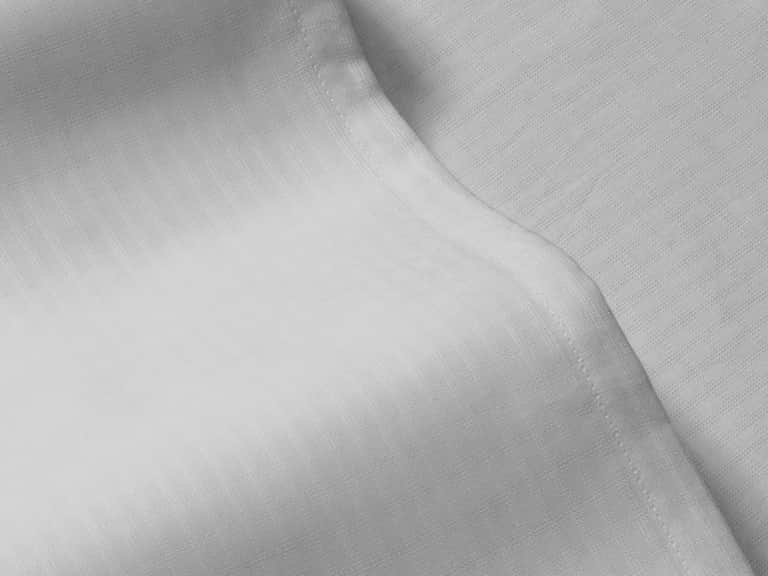
TENCEL™ Lyocell, the fiber used in the Hyperlite Sheet Set, is made from wood-based cellulose. The set is described as 100% TENCEL™ Lyocell, with a grid weave intended to encourage airflow. Its light feel and open-looking construction are relevant features for someone who prefers a less weighty sheet. That description should be read as a design detail, not a promise that the fabric will lower body temperature or solve the difficulty of sleeping after a night shift. Comfort is personal, and the room and other bedding layers remain part of the equation.
Weave describes the arrangement of yarns, and that arrangement influences hand feel, drape, and the amount of open space in a fabric. A tighter construction may feel smooth or substantial; a more open structure may feel lighter and allow air to pass more freely. There is no universal hierarchy in which one weave is best for everyone. A person who likes a crisp, cool-feeling surface may choose differently from someone who wants a soft, enveloping sheet, even if both are trying to sleep in a warm room.
Thread count, meanwhile, is a limited clue. It counts threads in a defined area, but it does not independently establish softness, durability, breathability, or quality. A number detached from the fiber and construction can tell a reader very little about how a sheet will feel. The Hyperlite set lists a thread count of 200 and identifies its grid weave and TENCEL™ Lyocell composition. For evaluating comfort, those details are more useful together than a single number considered in isolation.
The post-shoot problem is partly timing
After working overnight, a crew member may be trying to sleep while the body’s internal clock is receiving signals associated with daytime. The exact experience varies, but light exposure, activity, meals, stress, and the timing of sleep all influence how readily someone winds down. A comfortable sheet can make the bed more inviting; it cannot persuade the circadian system that noon is midnight. That is why a practical plan for daytime sleep usually begins with the broader environment and schedule, rather than with a purchase.
For a person returning home after a night call, a short and repeatable transition can help separate work from rest. The sequence might include a light meal if needed, a shower, a quiet commute home where possible, and a bedroom prepared before leaving for work. Blackout curtains or an eye mask can limit daylight; earplugs or steady background sound may help reduce interruptions, depending on the person and the household. A cool, comfortable room is often preferable to a stuffy one, though ideal settings differ and should be adjusted to individual needs.
These measures are not a ritual that has to be performed perfectly. Productions can run late; transport can be unpredictable; family and caregiving obligations do not disappear because a schedule has shifted. The more useful goal is to reduce avoidable obstacles. If a worker has only a limited period between calls, spending an hour searching for the perfect temperature setting or debating a sheet label is unlikely to help. A prepared room, fewer interruptions, and bedding that feels agreeable are modest, practical supports.
For people who rotate between nights and days, consistency may be difficult or impossible. When schedules permit, keeping a reasonably stable sleep window can make rest more predictable. When they do not, protecting the available sleep opportunity becomes especially important. Anyone experiencing ongoing severe insomnia, persistent exhaustion, or safety concerns related to sleepiness should consider speaking with a healthcare professional. Fatigue on a production set is not merely an inconvenience; it can affect concentration and safety for the person experiencing it and for colleagues around them.
Choosing sheets for a warm or changing room
There is no test that can predict a sheet’s feel perfectly from its product description. A useful approach is to consider the conditions in which it will be used and the sleeper’s actual preferences. Someone who regularly wakes feeling overheated may prefer a lighter sheet and a thinner cover. Someone who feels cold after a shower or in an air-conditioned room may want a different balance. The objective is not to pursue an abstract idea of maximum airflow; it is to avoid building a bed that feels warmer or heavier than necessary.
- Start with the room. Notice whether heat, humidity, direct sun, or weak ventilation is the main source of discomfort. Sheets cannot compensate for a persistently hot bedroom.
- Look beyond the fiber label. Consider the fabric’s weight, weave, drape, and care requirements. Construction can shape the experience as much as material category.
- Keep the rest of the bed in view. A thick duvet or mattress protector may alter the feel of the sleep surface. If the bed is too warm, changing one layer at a time can help identify what is contributing.
- Use personal evidence. Think about whether you prefer crisp or silky, light or substantial, and whether you tend to feel warm during sleep. These observations are more practical than assuming a popular material will suit everyone.
- Check care instructions. Detergent residue, fabric softener, or an unsuitable drying routine can affect how fabric feels. Follow the maker’s directions and avoid adding products that irritate your skin.
The Hyperlite Sheet Set offers one example of a lightweight option: a flat sheet, fitted sheet, and pillowcase or pillowcases made from 100% TENCEL™ Lyocell, in a grid weave designed to increase airflow. The manufacturer’s stated construction makes it a relevant choice to consider for readers who favor a light-feeling surface. Whether it is comfortable for an individual will still depend on their preferences, room conditions, and the other layers on the bed. The product details are available on the Hyperlite Sheet Set page.
Laundry is part of the sleep environment
A sheet’s performance is not frozen at the moment it comes out of its packaging. Washing and drying habits affect texture over time, and a sheet that feels agreeable when clean may feel different if detergent, fragrance, or softener builds up in the fibers. People with sensitive skin may have particular reason to choose products carefully and rinse thoroughly. The manufacturer’s care instructions are the sensible starting point; improvised high temperatures or harsh treatments may shorten the useful life of bedding.
For production workers, laundry can be another task competing with recovery. A low-fuss routine may be more sustainable than an elaborate one: keep an extra set available if possible, wash according to the care label, and make sure bedding is fully dry before remaking the bed. A clean, dry surface is not glamorous, but it removes a few avoidable sources of discomfort. There is an ordinary dignity in coming home to a bed that is ready, especially when the rest of the day has been governed by a call sheet.
It is also worth noticing whether a sheet is compatible with the mattress and any protector. A fitted sheet that pulls loose or bunches under the body can become a nuisance, particularly when someone is trying to sleep during daylight hours. Check mattress depth and fit before buying, and consider whether extra layers are adding warmth. Small practical mismatches are easy to overlook in product descriptions and obvious at three in the afternoon when a person is attempting to get eight hours of rest before the next call.
Comfort is not a substitute for a safer schedule
There is a temptation in wellness writing to make every problem answerable through individual optimization: the right fabric, the right routine, the right cup of something. But irregular work is not simply a personal habit to be corrected. Production schedules, commute length, turnaround time, noise, caregiving, and the availability of a quiet place to sleep all shape the chances of recovery. A better sleep surface may help at the margins; it does not remove the structural pressures of work performed at unusual hours.
That distinction matters for film and television crews, whose jobs vary widely. A performer, a camera assistant, a production coordinator, and a location worker may face different hours and different demands. Even within one production, the schedule can change from day to day. Advice should therefore be flexible rather than prescriptive. A recommendation that assumes a person can control their bedtime, bedroom temperature, or household noise may be useless to someone who has little control over any of them.
Employers and production teams have a role in fatigue management, too. Adequate rest opportunities, sensible scheduling, access to safe transport when needed, and a culture in which workers can raise fatigue concerns all matter. Individual routines and bedding choices are personal tools, not a replacement for decisions made at the organizational level. Sleep education is most useful when it acknowledges both sides: what a person can adjust at home and what a workplace can do to make recovery more possible.
A small decision, in a larger ritual
The hours after a night shoot are a strange hinge in the day. Outside, the city is becoming louder and brighter; inside, the worker is trying to lower the volume of a mind that may still be replaying a sequence, a note, a missed meal, or tomorrow’s start time. It is not surprising that sleep can be elusive. The room cannot erase the shift, but it can be arranged to ask less of the person entering it.
That arrangement is made of unremarkable choices: dim the light, set the phone aside, prepare the room, reduce unnecessary noise, choose covers that do not feel oppressive. Airflow in sheets belongs in this practical register. A breathable, lightweight fabric may contribute to a more comfortable sleep surface, especially for someone who tends to feel warm. Its effect is modest, variable, and dependent on the rest of the environment. That modesty is not a defect. Useful improvements often work quietly, without claiming to do everything.
For overnight workers, the best bedding decision is not necessarily the one with the most ambitious promise. It is the one that suits the room, the sleeper, and the hours they have to recover. Fiber and weave provide clues; personal experience supplies the verdict. A well-chosen sheet can make a bed feel more welcoming after the long artificial night of a production call. It cannot make the schedule gentle. It can make the landing a little softer.